
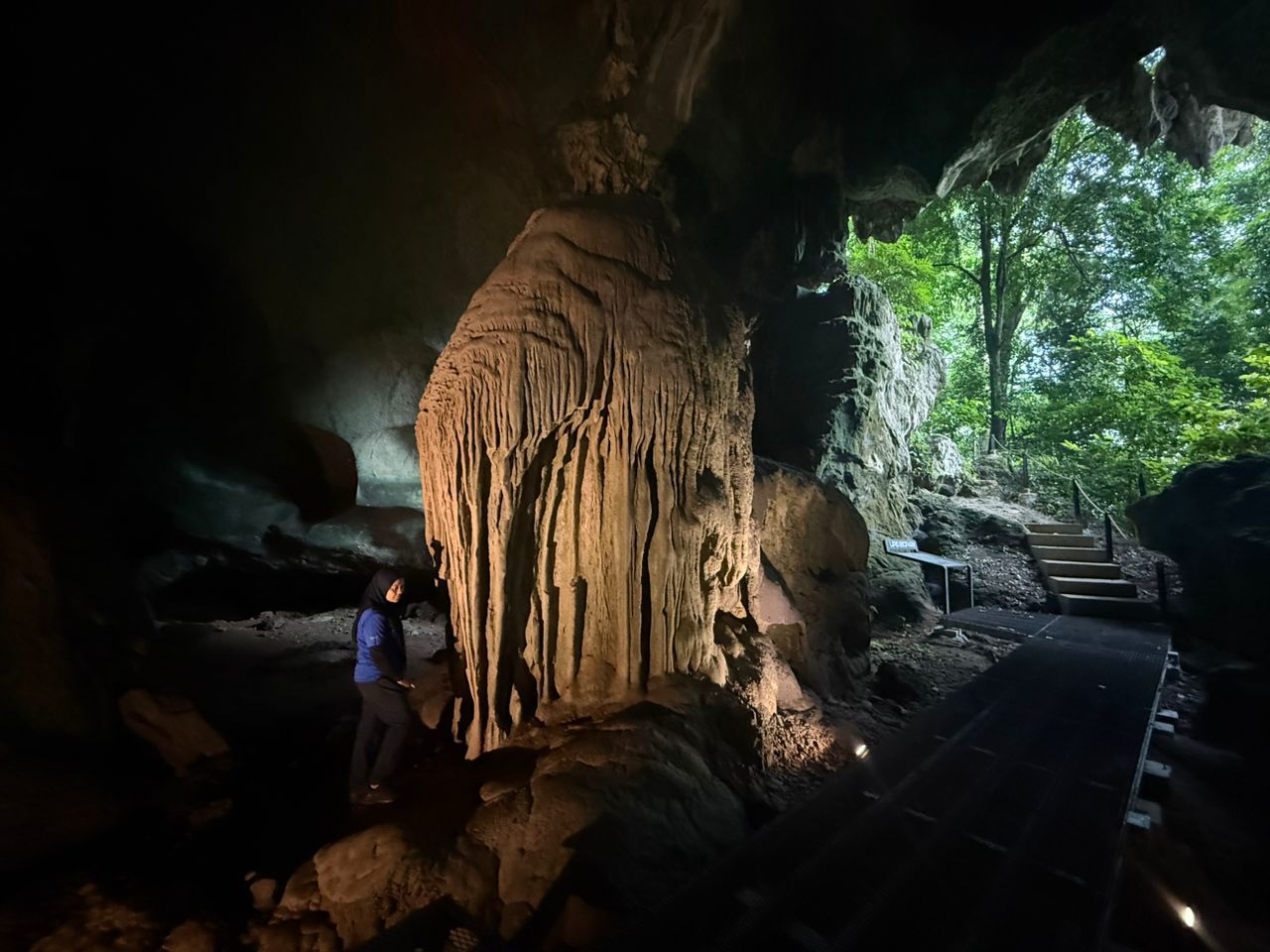
When you step into a cave like Gua Bama, you enter a space shaped over 250–300 million years. Your actions today determine whether it survives another million.
Why Caves Are Sensitive Ecosystems
Unlike surface environments, cave ecosystems develop extremely slowly and are highly vulnerable to disturbance.
1. Slow Mineral Formation
Speleothems (stalactites, stalagmites, flowstone) grow at rates of 0.1 to 10 millimeters per year.
A single broken stalactite represents thousands of years of mineral deposition — irreplaceable within human timescales.
2. Unique Wildlife Habitats
Caves host specialized species adapted to darkness, stable temperatures, and high humidity.
- Bats: Critical for pollination and insect control
- Cave-adapted invertebrates: Found nowhere else on Earth
- Fungi and bacteria: Essential for nutrient cycling
3. Delicate Rock Structures
Limestone is porous and reactive. Human oils, dirt, and moisture from skin contact can:
- • Discolor formations permanently
- • Stop mineral deposition
- • Introduce algae or bacteria
4. Bat Colonies and Darkness
Bats rely on stable darkness for rest. Disturbances can cause colony abandonment, disrupting entire ecosystems both inside and outside the cave.
Key Principle: Cave ecosystems cannot "bounce back" quickly. What you break today may never heal.
Responsible Visitor Guidelines
🚫Do Not Touch Formations
Even clean hands carry oils, bacteria, and dirt that contaminate limestone surfaces.
Rule: If it looks delicate, don't touch it. If it looks sturdy, still don't touch it.
🔇Avoid Loud Noises
Excessive noise disturbs roosting bats and disrupts the cave's natural acoustic environment.
- ✗Shouting or yelling inside cave chambers
- ✗Playing music or audio on portable speakers
- ✗Making intentional loud echoes for entertainment
🚮Leave No Trace
Every piece of litter left behind contaminates the cave environment.
Pack It In, Pack It Out
Bring a small trash bag and take all waste with you
No Organic Waste
Even fruit peels or food scraps disrupt cave ecology
👣Stay on Marked Paths
Stepping off trails compacts fragile cave floor ecosystems and risks damaging unseen formations.
At Gua Bama: Follow the established trail routes. If you're unsure about a path, ask your guide or turn back.
🦇Do Not Disturb Bats
Bats are protected wildlife and essential to ecosystem health.
- ✗Never shine lights directly at roosting bats
- ✗Do not use camera flash near bat colonies
- ✗Avoid approaching roosting areas closely
- Observe quietly from a respectful distance
Community-Based Conservation at Gua Bama
As one of the main geosites of Lipis Geopark, Gua Bama exemplifies community-based eco-tourism — where local involvement plays a key role in protection.
Local Stewardship
The site is actively maintained by the community of Kampung Relong, who:
- Provide guided tours with geological and cultural interpretation
- Monitor visitor impact and maintain facilities
- Educate visitors about conservation principles
- Benefit economically from sustainable tourism
How Your Visit Supports Conservation
When you book guided tours through licensed operators like Tuah Travel:
Economic Incentive
Tourism revenue motivates local communities to protect natural sites
Environmental Awareness
Guided interpretation builds appreciation for geological heritage
Facility Maintenance
Tour fees support upkeep of trails, shelters, and waste management
Visitor Management
Guides ensure responsible behavior and minimize environmental impact
Sustainable Tourism Model: When done right, tourism becomes a conservation tool — not a threat.
Geopark Conservation Principles
Lipis Geopark operates on three interconnected pillars:
Geoconservation
Protecting geological features, formations, and landscapes for scientific study and public education.
Geoeducation
Raising awareness about Earth's history, geological processes, and the value of geological heritage.
Geotourism
Promoting sustainable tourism that benefits local communities while protecting natural sites.
Gua Bama exemplifies all three — a living example of how geological heritage can be protected, understood, and shared responsibly.
Your Personal Responsibility Checklist
Before visiting Gua Bama or any limestone cave, commit to these principles:
A Final Message
Gua Bama is ancient. Our responsibility is modern.
When you visit a cave, you enter a space shaped over millions of years — a geological archive that tells the story of Earth's deep time.
Respect ensures it remains for generations to come. Your actions today determine whether future visitors will experience the same wonder you do.